
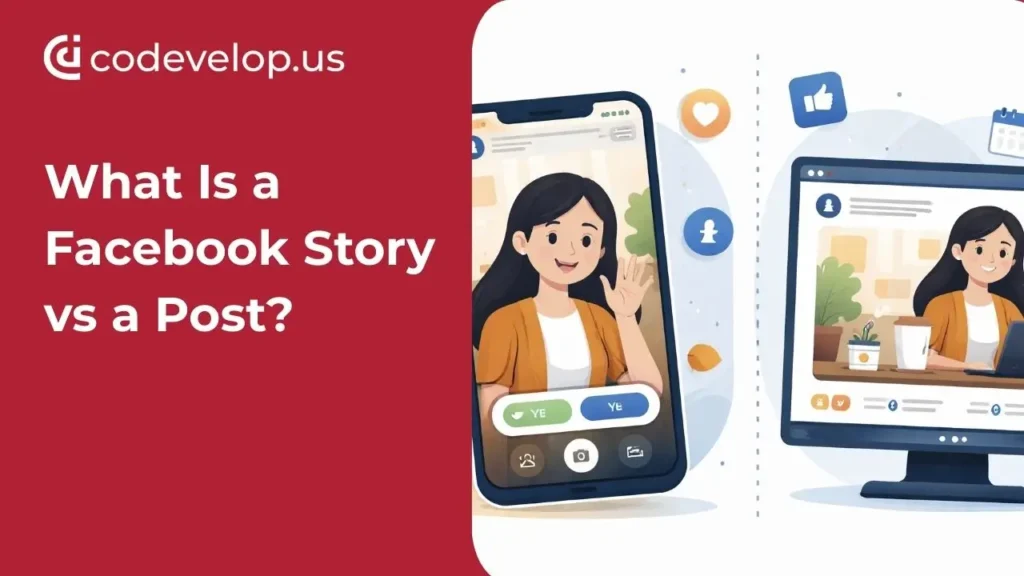
Introduction: Why This Even Matters
If you’ve ever tried to grow a business on Facebook, you’ve probably hit that confusing moment where you’re like, “Should this be a post or a story?” Don’t worry — every marketer asks this at some point. Facebook gives you both options, but they behave totally differently. And if you don’t understand the difference, you end up posting the wrong stuff in the wrong place and wondering why no one saw it.
I’ve worked with small businesses who kept dumping polished ads into Stories (wrong place, wrong format), and others who posted casual behind-the-scenes stuff as permanent posts (also not ideal). Once you understand how Stories and Posts actually work, things finally click — and you stop fighting the algorithm.
So let’s break this down like humans, not like a boring help center article.
What a Facebook Post Actually Is (in simple human words)
A Facebook post is… well, the traditional thing. It sits on your page. It hangs out on your feed forever (or until you delete it). People can scroll back months, sometimes years, and still find it. It’s permanent-ish content.
Posts are best for:
- Announcements
- Promotions
- Product launches
- High-quality photos
- Testimonials
- Anything you want people to find later
Think of posts like the “front window” of your business. If someone discovers your page for the first time, your posts help them understand who you are and what you offer.
Posts are searchable, shareable, and treated like real content. They’re meant to be seen by a wide audience over time, not just for a few hours.
But here’s the catch… posts get way less reach than they used to. The Facebook algorithm has become stingy, so most organic posts barely hit 5–10% of your audience unless they get early engagement.
That’s why brands rely on both posts AND stories — they serve different jobs.
What a Facebook Story Actually Is (and why people love it)
Facebook Stories came out because Instagram Stories exploded, and Facebook didn’t want to feel old. Stories are quick, temporary, and super casual. They disappear in 24 hours and sit at the top of the app, which is prime real estate.
Stories are for the “in-the-moment” stuff:
- A behind-the-scenes clip at your office
- A quick offer for the day
- Polls
- Stickers
- Short videos
- Casual photos
- Things you wouldn’t want to stay on your feed forever
Here’s the cool part: Stories get closer attention because people actually tap through them on purpose. It feels like peeking into someone’s day, not reading an ad.
And unlike posts, you don’t need to be polished. In fact, the less perfect it looks, the more human it feels.
Businesses often forget that Stories are meant to be disposable. You don’t overthink them. You don’t hire a designer for them. You just show what’s happening.
Think of Stories as “your daily highlight,” not your brand brochure.
How Posts Behave in the Algorithm
Here’s the frustrating truth: Facebook posts used to travel far. Today? Not so much. The algorithm pushes posts that get quick engagement — likes, comments, shares — but if your audience is sleepy or small, your post won’t go far.
Posts stay on your page, but Facebook doesn’t keep resurfacing them. They kind of fade out unless someone specifically goes looking.
Does this mean posts are useless? No. They build your credibility long-term. Imagine someone checking your page and it hasn’t been updated in six months — not great for business.
So posts work like your website:
Static, solid, trustworthy… but not always exciting.
How Stories Behave in the Algorithm
Stories are completely different. They show up at the top of the app, in that little row of circles everyone taps through absentmindedly.
The key thing?
Stories don’t rely on likes.
They rely on views, taps, replies, and how often people interact with your content.
If someone taps your Stories often, Facebook shoves you toward the front of their Story bar.
If they skip you too fast?
You sink to the back.
Stories can also reach people who don’t interact with your posts — which is wild.
So while posts build your brand, Stories build your presence.
When You Should Use a Post vs When You Should Use a Story
A good rule of thumb:
If you want it remembered, make it a post. If you want it seen today, make it a story.
Examples:
Posts are better for:
- “We just launched a new service.”
- “Here’s our latest project.”
- “Meet our team.”
- “Here’s a long explanation or guide.”
Stories are better for:
- “Hey, quick reminder!”
- “Flash sale today only.”
- “We’re at an event, come say hi.”
- “Here’s what we’re working on right now.”
- “Vote: which design do you prefer?”
Stories = real-time.
Posts = long-term.
Use both. They support each other.
How Brands Usually Mess This Up
Here’s what I see all the time:
Companies dump the same polished graphic everywhere — posts, stories, ads, reels, whatever.
Big mistake.
People don’t want the same thing in all formats. They want the content to fit the format.
Stories are casual.
Posts are polished.
When you treat them the same, both underperform.
Another common mistake:
Businesses hide everything in posts and never post Stories.
Meanwhile, their competitors are:
- Posting 4 casual stories a day
- Showing behind-the-scenes moments
- Adding polls
- Talking directly to viewers
Guess who wins?
Not the “perfect” company — the present one.
Real Examples of Story vs Post Done Right
A painting company example:
Post:
“Just finished a full exterior repaint in Austin. Here’s the before/after.”
Clean photo, solid caption, permanent content.
Story:
Painter filming the team prepping the wall, saying, “We start early before the sun hits — makes the finish smoother.”
It builds trust, personality, and engagement.
A fitness studio example:
Post:
“Our new class schedule is here!”
Clear, evergreen, informational.
Story:
A sweaty selfie video from the trainer saying, “Monday’s class was packed. You guys brought the energy!”
Feels human.
An eCommerce store example:
Post:
Professional photos of the product.
Story:
The owner unboxes new inventory with their phone.
Stories win attention.
Posts win credibility.
Both matter.
Best Practices Without Sounding Like a Social Media Robot
You don’t have to follow every “guru tactic.” You just need to understand how people behave.
Here’s what works in real life:
- Use Stories every day (or close to it). They’re quick. They keep you visible.
- Avoid overproducing. Stories should feel raw.
- Use Posts for things that matter long-term.
- Let the team be part of your content. People love faces.
- Mix reminders, fun stuff, and education.
- Don’t post and ghost. Reply, like, talk — it’s social media.
The biggest mistake?
Trying too hard to be perfect.
Social media is messy. People expect that.
Conclusion: Stories and Posts Are Two Different Tools — Use Them Properly
Stories are your day-to-day “I’m here” signal.
Posts are your “here’s who we are” foundation.
When you mix both the right way, your reach grows, your brand feels alive, and your audience actually pays attention instead of scrolling past you like wallpaper. If you’re still posting randomly or guessing what goes where, this is your sign to create a simple rhythm—stories daily, posts weekly, and a strategy behind both. If you want help planning your Facebook content, improving your engagement, or building a real social strategy that actually works, Codevelop can handle everything for you—content, design, scheduling, and growth.
Reach out to Codevelop, and let’s make your brand stand out where your audience actually spends their time.
