
Social media has taken the lead in being one of the strongest growth tools interior designers use in today’s world of technology. Many professionals assume that merely posting pictures of finished projects is enough; successful designers know otherwise, though. Social media builds your brand, attracts your ideal clients, strengthens credibility, and showcases your design style long before someone ever steps foot in your office.
The interior design industry is a visually-driven profession, and through channels like Instagram, Pinterest, Facebook, and LinkedIn, the world has been given a stage to showcase its creativity in real time. But in 2025, to really grow, designers need much more than pretty posts; they need a strategy. And that’s where the difference between creating content and actually marketing that content becomes important. When you understand how both of those work together, social media turns into a source of consistent leads instead of a random posting habit.
Why Social Media Matters to Interior Designers Today
Social media is where clients pre-judge your work, style, and professionalism. Both homeowners and commercial clients are now browsing through online portfolios, reels, client testimonials, mood boards, and before-and-after videos even before filling out their inquiry form. This way, social platforms have turned into a 24/7 gallery representing your signature design approach, attention to detail, and problem-solving ability.
People believe in what their eyes can see. This connection you build by sharing your design process, color ideas, space transformations, material selections, and styling details is just unparalleled by any traditional advertising method. Good social media shows you not only the result but the thought behind it-what your clients really value.
Content Creation for Interior Designers
Content creation is where your ideas materialize into engaging visuals and stories that your audience can relate to. The designers who kill it online craft content that reflects their design philosophy, such as walkthroughs of projects, before-and-after comparisons, behind-the-scenes video, layout sketches, mood boards, choices of materials, styling tips, common design mistakes to avoid, and client reactions.
From the point of view of search engine optimization and visibility, creating regular content sends the algorithms just the right signals: regular postings, meaningful engagement, and clear themes. You start to build up authority by publishing educational insights into how to make the most of the available space, or some tips on renovation. Showing your transformation stories, you establish authority. Sharing your journey and personality builds up trust.
Content Marketing for Interior Designers
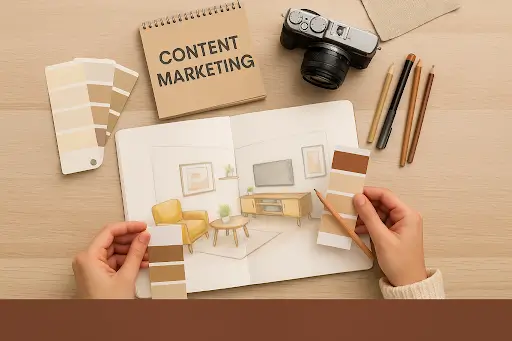
While content creation has to do with the creation of posts, content marketing encompasses the process through which those posts reach the right audience to drive real business outcomes. This may include optimizing your posts for searchability, using appropriate hashtags, choosing the right platforms, repurposing content, running ads targeting homeowners or architects, and tracking performance to learn what captures attention.
Fast-growing interior designers on social media don’t just post photos; they build full marketing systems. They make content calendars, plan themes such as “kitchen week” or “colour palette month,” partner with vendors or furniture brands, use SEO-friendly captions, and display testimonials to build credibility. They repurpose every piece of content across platforms so that one project can become reels, carousels, Pinterest pins, LinkedIn posts, and website blogs.
How Both Work Together for Real Growth
When you compare content creation vs. content marketing for interior designers, the difference becomes clear. Content creation is what you show: your designs, your process, your ideas. Content marketing is how you show it: strategy behind posting, timing, captions, storytelling, and distribution that brings new clients to your page.
A designer might create a fantastic video showcasing the living room transformation, but without marketing, that video will be seen by only a few viewers. Marketing will enable you to optimize the same video for Instagram Reels, push it via paid ads to homeowners, share it on Pinterest so they can discover it months later, email it to your subscriber list, and embed it in a newsletter for existing clients. This combination is what turns content into bookings.
A Real Example in Context
Imagine an interior designer completing a modern apartment makeover. Content creation is when he shoots beautiful wide-angle photos of it, captures a walkthrough on camera, documents the transformation before and after, creates a mood board, and writes about the design style used. These materials showcase the talent while helping algorithms understand what category the content belongs to. Now, everything gets activated through content marketing.
The designer designs a week-long campaign for the project, using keywords like “modern apartment design ideas,” publishes the walkthrough as reels, puts still images on Pinterest, writes about the project on their website, and collaborates with the furniture brands used and shares testimonials from the client. Throughout the week, the designer tracks which platform brings the most saves and inquiries. This combination increases reach, engagement, and credibility.
Conclusion
Social media for interior designers is no longer optional; it’s the bedrock of modern visibility and client trust. Posting beautiful photos is important, but only when paired with a strong marketing strategy do the real client conversions start to happen. Content creation helps you present your style and skills, while content marketing ensures your work reaches the people who are actually searching for designers. When both work in tandem, your online presence becomes a powerful engine that attracts high-value clients, strengthens brand identity, and positions you as a leader in your field. For designers looking to grow in 2025, understanding this balance is going to be the key to long-term success in an increasingly competitive design landscape.
